Best Baby Teether Shapes and Textures: What Parents Should Look For
When babies start teething, they naturally want to chew, bite, and explore objects with their mouths. For parents, choosing a teether is not simply about finding the cutest design on the shelf.
Shape, texture, size, grip, material, and overall construction all matter.
A well-designed baby teether should be comfortable for small hands, provide an appropriate chewing surface, and be easy for parents to clean and maintain.
So, what makes a good baby teether?
In this guide, we’ll explain the most common baby teether shapes and textures, what each design can offer, and what parents should consider when choosing a silicone teether.
Quick Answer: What Shape Is Best for a Baby Teether?
There is no single “best” shape for every baby.
The right shape depends on the baby’s age, developmental stage, grip ability, and personal preference.
Generally, a good baby teether should have:
-
- An easy-to-hold shape
-
- Rounded edges
-
- Appropriate dimensions for the intended age
-
- Safe chewing surfaces
-
- Different textures where appropriate
-
- No unnecessary detachable parts
-
- A material suitable for the intended use
Animal shapes, rings, sticks, keys, fruit shapes, and ergonomic designs can all work when properly designed and manufactured.
Why Does the Shape of a Baby Teether Matter?
Babies have small hands and developing coordination.
A teether that is difficult to grip may quickly become frustrating. A design that is too large may be difficult to bring toward the mouth, while an unsuitable shape may not provide enough variety for chewing.
A thoughtful shape can help make a teether easier to:
-
- Hold
-
- Rotate
-
- Bite
-
- Explore
-
- Carry
This is why modern silicone teethers often combine ergonomic design with playful shapes.
7 Popular Baby Teether Shapes
Let’s look at some of the most common designs found in the baby-product market.
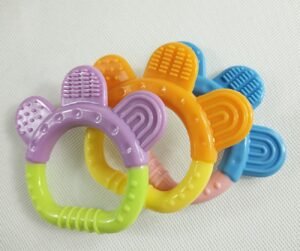
1. Teething Rings
Teething rings are among the most recognizable teether designs.
Their open center makes them relatively easy for babies to grip and rotate.
Potential advantages:
-
- Easy to hold
-
- Lightweight
-
- Simple structure
-
- Multiple chewing positions
Silicone rings can also be molded with raised textures around the outer surface.
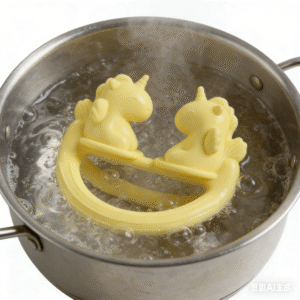
2. Animal-Shaped Teethers
Animal-shaped teethers have become increasingly popular because they combine functionality with visual appeal.
Common designs include:
-
- Bears
-
- Rabbits
-
- Elephants
-
- Cats
-
- Dogs
-
- Dinosaurs
Animal shapes can create multiple areas for babies to hold and chew.
For example, ears, paws, tails, or rounded body sections can become natural grip and chewing points.
However, the design should remain functional rather than adding unnecessary small components.
3. Bear Paw Shape Teethers
The bear paw shape is an interesting example of an ergonomic animal-inspired design.
A paw-inspired structure can provide:
-
- Multiple grip areas
-
- Different surface textures
-
- Rounded chewing points
-
- A recognizable and playful appearance
The design can also be customized through different silicone colors and surface patterns.
For baby-product brands, this type of design offers an opportunity to combine brand identity, product functionality, and visual differentiation.
 Related Article:
[Why the Bear Paw Shape Baby Teether Is a Parent’s Must-Have]
4. Teething Sticks
Teething sticks are usually elongated and designed to give babies a narrow surface to hold and chew.
Their slim shape can make them easy to manipulate, but the dimensions and structure should be appropriate for the intended age group.
The product should always follow the manufacturer’s recommended age and usage instructions.
5. Fruit-Shaped Teethers
Fruit-shaped teethers can include designs inspired by:
-
- Strawberries
-
- Apples
-
- Bananas
-
- Watermelons
-
- Oranges
These designs are particularly useful for brands looking for a playful or natural visual theme.
Fruit shapes can also be combined with textured surfaces to increase sensory variety.
6. Silicone Teething Keys
Key-shaped teethers are another popular design.
The multiple “key” sections can provide several chewing surfaces while the handle gives babies something to hold.
A good design should avoid unnecessarily thin or fragile sections.
7. Multi-Functional Teether Toys
Some modern teethers combine teething functionality with sensory play.
They may include:
-
- Multiple textures
-
- Flexible sections
-
- Different shapes
-
- Grip openings
-
- Sensory patterns
These products can provide babies with more ways to explore the object.
However, more features do not automatically mean a better product.
Simple, well-engineered designs can be highly effective.
Why Does Texture Matter on a Baby Teether?
Shape determines how a baby holds a teether.
Texture determines how the surface feels during chewing and exploration.
Silicone is particularly suitable for textured designs because it can be molded into detailed patterns.
Common teether textures include:
-
- Ridges
-
- Bumps
-
- Dots
-
- Grooves
-
- Smooth pads
-
- Raised patterns
Different textures create different tactile sensations.
Smooth Silicone Surfaces
Smooth areas provide a simple, soft surface for babies to chew.
They can also make cleaning easier.
A balanced teether may combine smooth areas with textured sections instead of covering the entire product with aggressive patterns.
Raised Ridges
Raised ridges can provide additional tactile stimulation as babies bite or rub their gums against the surface.
Ridges can also create visual differentiation between different parts of a teether.
The edges should be appropriately rounded and designed for the intended age group.
Rounded Bumps and Massage Points
Small rounded bumps can add another layer of texture.
When a baby bites down, the bumps create localized pressure against the gums.
For product designers, the size, spacing, height, and hardness of these features should be carefully considered during mold development.
Multi-Texture Teethers: Why Variety Can Be Useful
Babies explore objects through touch and their mouths.
A multi-textured teether can offer several sensations within one product.
For example:
Smooth surface + raised ridges + rounded bumps
This combination gives babies different areas to explore.
However, texture should never be added simply for appearance.
Every texture should have a clear purpose and remain easy to clean.
How Hard Should a Silicone Teether Be?
There is no universal hardness specification that is ideal for every teether.
The appropriate hardness depends on:
-
- Product structure
-
- Intended age
-
- Thickness
-
- Texture design
-
- Silicone formulation
-
- Manufacturing process
-
- Intended chewing experience
For OEM development, hardness should therefore be evaluated together with the complete product structure rather than selected as an isolated number.
A softer silicone formulation may behave very differently depending on the thickness and geometry of the product.
Why Grip Design Is So Important
A teether may have excellent material and texture, but if a baby cannot hold it comfortably, the product becomes less useful.
When developing a baby teether, designers should consider:
Finger Size
The grip area should be appropriate for small hands.
Weight
A lightweight design is generally easier for young babies to manipulate.
Balance
The center of gravity can affect how easily a baby rotates and positions the teether.
Grip Openings
Open areas can provide convenient places for fingers to pass through.
Surface Friction
Silicone naturally provides a relatively grippy surface, which can help babies maintain their hold.
What Size Should a Baby Teether Be?
There is no universal size suitable for every baby teether.
Product dimensions should be determined according to:
-
- Intended age group
-
- Product shape
-
- Grip requirements
-
- Mouth-accessible areas
-
- Applicable safety requirements
Parents should always follow the manufacturer’s recommended age range.
For manufacturers, dimensions should also be evaluated through appropriate safety testing and design validation.
Silicone Teether Shape vs Texture: Which Is More Important?
It’s not really a choice between the two.
Shape and texture work together.
Imagine two products:
Product A
Simple shape + smooth surface
Product B
Ergonomic shape + several appropriately designed textures
The second product may offer more ways for a baby to grip and explore.
But complexity should never replace good engineering.
The goal should be:
Functional shape + useful texture + appropriate material + safe construction.
How to Choose a Silicone Teether for Your Baby
Parents can use this simple checklist.
1. Check the Material
Look for clear information about the material and intended application.
2. Check the Age Recommendation
Choose a product designed for your baby’s developmental stage.
3. Look at the Shape
Ask:
-
- Is it easy to hold?
-
- Is it lightweight?
-
- Does it have rounded edges?
4. Examine the Texture
Look for textures that are functional rather than purely decorative.
5. Check the Construction
Avoid products with loose or unnecessary detachable components.
6. Check Cleaning Instructions
A teether should be practical to clean regularly.
7. Inspect It Before Every Use
Replace the product if it becomes damaged.
How Should a Baby Teether Be Designed for Different Teething Stages?
Teething is not exactly the same for every baby.
Different stages can involve different chewing preferences.
Early Teething
Babies may prefer softer surfaces and easy-to-hold designs.
Active Teething
Babies may chew more frequently and seek different textures.
Later Teething
As more teeth emerge, babies may explore different parts of a teether.
For manufacturers, this means product development should consider the intended age group from the beginning.
Why Silicone Is Popular for Textured Teethers
Silicone offers several manufacturing advantages for teether design.
It can be molded into:
-
- Rounded edges
-
- Raised textures
-
- Fine patterns
-
- Ergonomic grips
-
- Animal shapes
-
- Flexible structures
This gives designers significant freedom to develop products that combine appearance and functionality.
For OEM/ODM projects, silicone molding also allows brands to develop distinctive shapes instead of relying only on generic stock designs.
From Product Idea to Finished Silicone Teether
For a custom baby teether, good design starts before mold production.
A typical development process may include:
Step 1: Concept Development
Define:
-
- Target age
-
- Product dimensions
-
- Shape
-
- Texture
-
- Intended use
Step 2: DFM Review
The manufacturer reviews the design for:
-
- Wall thickness
-
- Draft angles
-
- Undercuts
-
- Texture depth
-
- Mold structure
-
- Production feasibility
Step 3: Mold Development
The mold is developed according to the approved design.
Step 4: Prototype Evaluation
Samples are checked for:
-
- Shape
-
- Size
-
- Grip
-
- Texture
-
- Flexibility
-
- Appearance
Step 5: Testing and Validation
The finished product should be evaluated according to applicable requirements for the intended market.
Step 6: Mass Production
Production follows approved specifications and quality-control procedures.
This process helps turn an attractive concept into a practical production-ready baby product.
Common Mistakes When Choosing a Baby Teether
Parents and brands should watch out for several common mistakes.
Choosing Appearance Over Function
A cute design is valuable, but it should not compromise usability or safety.
Choosing a Teether That Is Too Complicated
More parts and more features can create additional design considerations.
Ignoring Cleaning Requirements
A teether that is difficult to clean may be inconvenient for everyday use.
Focusing Only on “Food-Grade Silicone”
Material claims should be considered together with product design, testing, manufacturing quality, and intended use.
Ignoring Product Condition
Even a high-quality teether should be replaced if it becomes damaged.
Frequently Asked Questions About Baby Teether Shapes and Textures
What is the best shape for a baby teether?
There is no single best shape for every baby. The ideal design should be easy to hold, appropriately sized, suitable for the intended age, and designed with safe chewing surfaces.
Are textured silicone teethers better?
Textured teethers can provide additional tactile and chewing sensations, but texture quality matters more than the amount of texture. Surfaces should be appropriately designed, rounded, durable, and easy to clean.
Are animal-shaped teethers safe?
Animal-shaped teethers can be suitable when properly designed and manufactured. The important factors include dimensions, construction, material, absence of unsafe detachable parts, and compliance with applicable safety requirements.
Is a bear paw teether good for babies?
A bear paw-shaped design can provide multiple grip and chewing areas. Whether it is suitable depends on its specific dimensions, material, construction, age recommendation, and safety testing.
Should baby teethers be soft or hard?
The appropriate firmness depends on the product design, silicone formulation, thickness, intended age, and intended use. A teether should provide an appropriate chewing surface without relying on excessive hardness.
What should I look for in a silicone teether?
Look for:
-
- Appropriate material
-
- Suitable age recommendation
-
- Easy grip
-
- Rounded edges
-
- Functional textures
-
- Durable construction
-
- Clear cleaning instructions
-
- Relevant safety information
Final Thoughts: The Best Teether Is Designed Around the Baby
When choosing a baby teether, it is easy to focus on the color or cute animal shape.
But the details behind the design matter much more.
A thoughtfully developed teether combines:
Appropriate material + ergonomic shape + useful texture + suitable dimensions + reliable construction.
Silicone gives manufacturers the flexibility to create many different designs, from simple rings to textured animal shapes and custom OEM products.
For parents, the goal is not to find the most complicated teether.
It is to find a product that is appropriate for the baby’s age, comfortable to handle, easy to clean, properly manufactured, and designed for its intended use.
For baby-product brands, these same principles are the foundation of a successful silicone teether product.
Related Teething Resources
Are Silicone Teethers Safe for Babies? What Parents Should Know
Learn how material, design, manufacturing, testing, and correct use contribute to teether safety.
Silicone vs Plastic Teethers: Which Is Safer for Your Baby?
Compare the characteristics of silicone and plastic teething products.
How to Clean and Sterilize Baby Teethers Safely
Learn how to clean and maintain baby teethers for everyday use.
Top 10 Signs Your Baby Is Teething (And What to Do About It)
Understand common teething signs and ways parents can provide comfort.
Why the Bear Paw Shape Baby Teether Is a Parent’s Must-Have
Explore the design features behind a bear paw-shaped silicone teether.
For Baby Product Brands: Custom Silicone Teether OEM/ODM
QLINK Silicone develops and manufactures silicone baby products for international brands and importers.
Our OEM/ODM capabilities can support:
-
- Custom silicone teether design
-
- Existing-mold teether sourcing
-
- Custom mold development
-
- Silicone material selection
-
- Color customization
-
- Prototype development
-
- Private-label packaging
-
- Mass production
From an initial product concept to mold development and production, the goal is to create silicone baby products that balance function, manufacturability, quality, and market requirements.
Looking for a custom silicone teether manufacturer? Contact QLINK Silicone to discuss your project.