
A good silicone suction bowl comes down to five things: a full-ring suction base (not four rubber pads), one-piece platinum-cured construction, a rim and base that are trimmed cleanly, verified food-contact compliance for your market, and a factory that actually runs suction and flatness tests on every batch. Price differences between quotes usually trace to material fillers and base design, not branding.
I’ve managed suction bowl projects at QLink Silicone for years, including the frustrating kind: the buyer whose sample stuck beautifully to our glass table and then “failed” on a customer’s textured wooden high chair. This guide covers what actually matters when you’re sourcing, including the honest limits of suction bases, so you can set expectations with your own customers before they set them for you in a review.
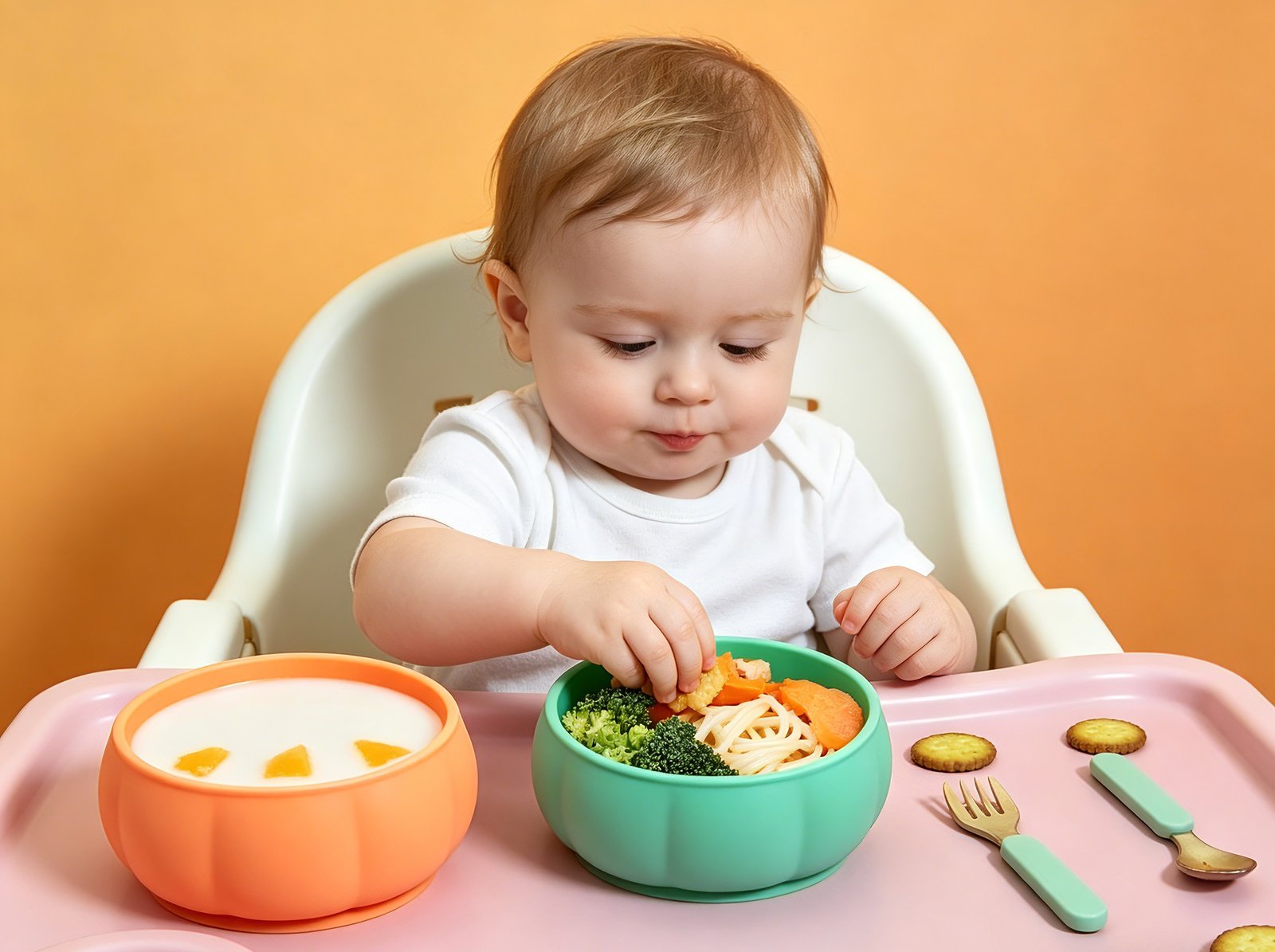
What makes a suction base actually stick?
The physics is simple: the base evacuates air against a smooth, non-porous surface, and atmospheric pressure holds the bowl down. The design details decide whether it works in real kitchens:
Full ring beats pads. A continuous circular lip around the base displaces air evenly and reseats after small knocks. Four separate pads each leak independently, and one edge lifting kills the hold. Molded-in ring bases also can’t delaminate, because there’s nothing to delaminate.
Be honest about surfaces. Suction works on smooth plastic tray surfaces, glass, and sealed stone. On wood, bamboo, textured silicone placemats, or a scratched tray, nothing sticks, and a bowl marketed as “spill-proof” will generate exactly the reviews you don’t want. We tell brand clients to word their packaging “helps prevent spills on smooth surfaces”, which is both accurate and refund-proof. A quick lift-by-the-rim test on a glass table tells you everything during sample review.
Check the release tab. Some designs add a small tab to break the vacuum for parents. It’s a genuine usability feature, but it’s also a small protrusion, so check it against small-parts and pull-test requirements the same way you would a teether handle.
One-piece construction is worth the tooling
Two-part bowls (a silicone bowl glued or pressed into a separate plastic base) exist because the tooling is cheaper. The joint is the problem: it’s a food trap, a seam that shows wear, and a place where the base can separate after dozens of dishwasher cycles. One-piece molded bowls cost a bit more per unit and pay for themselves in returns you never process. If a supplier only offers two-piece, ask why, and ask how the joint survives a 30-minute boil test.
Sizes, capacity, and the insulated option
| Format | Typical capacity | Best for | Notes for buyers |
|---|---|---|---|
| Small suction bowl | ~300 ml | 6-12 months, first solids | Easier for small hands to reach over the rim |
| Large suction bowl | ~450-500 ml | Toddlers, full meals | Check base diameter scales with capacity, or suction weakens |
| Double-layer insulated | ~350-450 ml | Warm meals, slower cooling | Hollow wall must be fully sealed; ask how leak-tightness is tested |
| Divided suction plate | Sectioned | Picky eaters, portioning | Partition corners are deflashing hotspots, inspect them |
If you go insulated, the sealed hollow wall is the risk point: any pinhole leaks water into the cavity on the first boil, and there’s no fixing it after shipment. It’s a legitimate product, we make the double-layer insulated style in our suction bowl line ourselves, but it needs a leak test in the QC plan, not a hope.

The QC tests that separate good batches from bad ones
Suction bowls need their own test plan, not a generic silicone checklist:
Suction and lift test. Seat the bowl on clean glass, yank the rim upward with reasonable force. A good base resists and peels with a sound; a bad one pops off silently because the ring never sealed. Run it on ten pieces, not one, because base flatness varies with molding and cooling.
Flatness check. A warped base can’t seal even with a perfect ring design. Bases should sit flush against glass with no visible rocking. Warping comes from improper post-cure stacking, which is a process discipline question you can ask the factory directly.
Rim and interior deflashing. Lips and inner walls are what mouths touch. Run a finger around every edge of three random samples per batch. Flash on a bowl rim is a cut-lip complaint and a one-star review.
Thermal cycling. Boil a sample, freeze another, run a third through a dishwasher, then repeat the suction test on each. Silicone handles -40°C to 230°C when it’s platinum-cured and unfilled, but the suction geometry has to survive the same abuse, and cheap material stiffens or warps after a few cycles.
Compliance for feeding products
Bowls follow the same food-contact logic as teethers, with one addition worth knowing. For the US: FDA facility registration (ours is No. 3023263259), material compliance with 21 CFR 177.2600, and CPSIA testing. For Europe: LFGB migration testing on the silicone, plus EN 14372, the specific standard for feeding utensils, which covers mechanical requirements bowls fall under. For the full standard-by-standard breakdown, see our certification comparison.
What customization looks like on bowls
Suction bowls are one of the easier products to make your own: color matching to a Pantone chip is standard, a debossed logo on the rim or base is a minor tooling tweak, and retail packaging runs from plain kraft boxes to full-color printed sleeves. Our OEM orders start at 500 pieces, standard catalog designs at 1,000, and the full stage-by-stage process is in our design-to-shipment walkthrough. Pair bowls with silicone bibs and utensils in the same material family and you get a coherent set that ships in one container and photographs like a collection.
Expansion doesn’t have to stop at bowls, either. Our bottle-style silicone fruit feeder pouch, a safe self-feeding solution for babies from 6 months with 110 ml graduations, runs on the same OEM terms from 500 pieces, so a feeder can share the production slot and ship in the same container as your bowl order.
How to compare quotes without getting burned
Send every candidate factory the same three questions and score the answers: Is the base one molded piece, and what does the suction test procedure look like? What is the material, platinum-cured or not, filled or not, with which documentation? And what thermal cycle does the product survive in testing? The factory that answers with documents and test videos rather than adjectives is the one worth a sample order. Our factory audit checklist covers the supplier-level vetting, and the project team can walk you through a live suction test on camera, which is more convincing than anything written here.
Frequently asked questions
Why won’t my silicone suction bowl stick to the high chair?
Suction needs a smooth, non-porous surface. Wood, bamboo, textured placemats, and scratched trays break the seal. It’s physics, not a defect; wording the packaging honestly avoids the problem.
Are silicone suction bowls dishwasher safe?
Platinum-cured, one-piece silicone bowls are. Two-part bowls with glued joints are the risk; run a dishwashered sample through the suction and seam checks before committing.
What size silicone bowl suits which age?
Around 300 ml for first solids at 6-12 months, 450-500 ml for toddlers eating full meals. Larger bowls need proportionally wider bases or the suction weakens.
What MOQ should I expect for custom suction bowls?
OEM custom work commonly starts at 500 pieces and catalog designs at 1,000. Quotes far below that on “custom” bowls usually mean shared molds or a trader in the middle.