
Wholesale is the word every buyer uses and every supplier defines differently. At our factory floor, a wholesale silicone teether order means: production directly by the mold owner (us), pricing built from a transparent cost stack, packing specified per carton, and shipping terms stated in writing before the deposit. This article walks through how a silicone teether manufacturer actually quotes, packs and ships bulk orders — the parts that never make it onto a price list — so you can compare suppliers on substance instead of on a single FOB number.
We publish this because teether wholesale quotes vary by 30-50% between factories for what looks like the same product, and the difference is almost never a mystery. It is material grade, tooling ownership, packaging depth and inspection rigor. Once you can read a quote the way we build one, cheap quotes stop looking cheap.
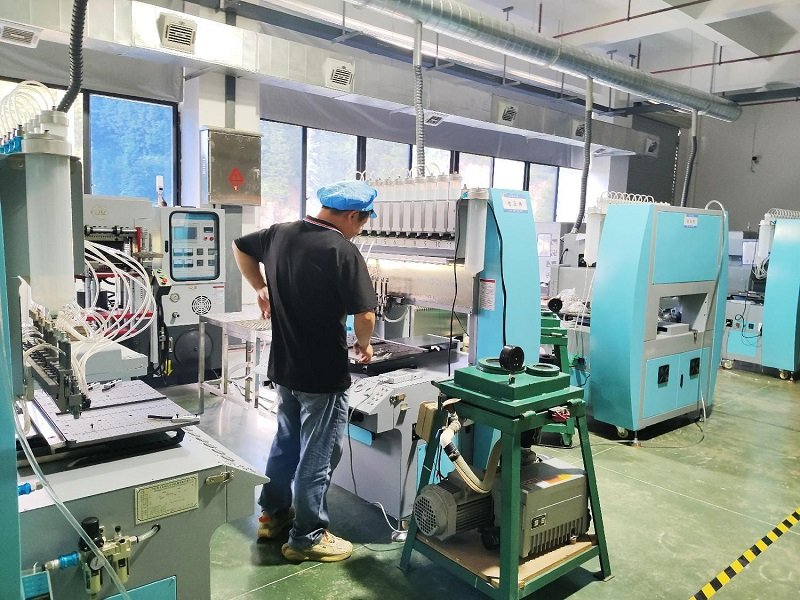
What “wholesale” means at the factory gate
Three terms do most of the work:
| Term | What it means | What it changes |
|---|---|---|
| EXW (ex-works) | Goods packed and ready at our warehouse; you handle everything from the gate onward | Lowest quote, but you carry freight, customs and risk from day one |
| FOB (free on board) | We deliver loaded containers to the Chinese port and clear export customs | The standard for most teether buyers; port charges and export paperwork are ours |
| DDP (delivered duty paid) | We ship to your door with duties paid | Simplest for you, but adds forwarder margins and duty risk on our side — expect a premium |
When you compare wholesale quotes, check the term first. An EXW price that looks 8% cheaper than a competitor’s FOB can easily be more expensive once you book freight yourself. Everything below assumes FOB, which is what the majority of our teether clients use.
How a silicone teether manufacturer builds your quote
A teether unit price is a stack, not a single number. These are the eight layers we calculate for every wholesale inquiry, roughly in order of impact:
| Cost factor | Why it moves the price |
|---|---|
| Silicone grade | Platinum-cured food-grade LSR costs more than peroxide-cured stock — but it is the grade that passes FDA and LFGB migration testing without cutting corners |
| Tooling status | Existing mold: amortized over thousands of units, near zero per piece. New custom mold: tooling is either paid upfront or spread into the unit price over an agreed quantity |
| Cavity count & cycle time | A 16-cavity mold at a 4-minute cycle produces four times the output of a 4-cavity mold — that efficiency lands directly in your unit price |
| Color program | Standard translucent or stock Pantone shades are free. A bespoke Pantone with a signed color standard costs a matching round plus tighter batch control |
| Secondary processes | Debossed logos are molded in and nearly free; printed graphics add ink, curing and an adhesion-check pass |
| Packaging depth | Bulk polybag costs cents; individual retail boxes with inserts can double the packaging share of a teether’s cost |
| Certification scope | Existing test reports for a design cost nothing to reuse; a new material or color combo may need fresh testing before shipment |
| Order quantity | Setups, color changes and QC overhead are fixed per run — bigger runs spread them thinner. See the tier table below |
If a quote arrives without this breakdown, ask for it line by line. A factory that refuses to show the stack is usually hiding either material substitution or a margin that will reappear later as an “urgent surcharge”.

Wholesale price tiers: how quantity moves the number
For teether designs in existing tooling, our tiers typically look like this:
| Quantity per design | What changes |
|---|---|
| 500 – 1,000 pcs | Flexible MOQ tier: full setup and QC overhead carried by a small run; standard colors, standard packaging |
| 1,000 – 3,000 pcs | Setup costs spread; custom Pantone matching becomes cost-neutral; packaging options open up |
| 3,000 – 5,000 pcs | Efficient machine booking, better resin purchasing; typically the first tier where a genuine volume price applies |
| 5,000+ pcs | Production scheduled on dedicated machine windows; best pricing, and tooling modifications (logo, vent tweaks) negotiable at low or no cost |
The numbers behind these tiers — and how sampling fees interact with them — are covered with real figures in our MOQ and sampling article. The short version: for existing molds, 500 pieces per design is a real production floor, not a marketing number, because the mold is already paid for.
Packaging options for wholesale teether orders
Packaging is where wholesale quotes hide the biggest surprises, so we quote it as three distinct levels:
- Bulk / polybag — teethers bagged in lots (typically 10-50 per bag), master-cartoned. For brands that re-pack locally, Amazon FBA prep, or promotional use. Cheapest per set, minimal protection per unit.
- Retail-ready — individual OPP or paper boxes with your artwork, barcode and compliance marks. Adds per-unit cost but lands on shelves as-is. We need print files early: artwork revisions late in the schedule are the most common cause of delayed shipments.
- Gift set — multi-teether or teether-plus-accessory sets in printed rigid or corrugated boxes. Highest perceived value; usually quoted as a separate SKU with its own MOQ.
Carton spec matters too: carton size, gross weight and pieces per carton determine your freight cost per unit. We provide these three numbers with every wholesale quote, because a lower unit price with 30% wasted carton space can cost more landed than the “expensive” quote.
Mixed-SKU orders: consolidating teether designs in one shipment
Few brands order 5,000 of one design. Most order 800 of four designs, and that is exactly how we plan wholesale production: one production window, multiple color changes, shared QC batch. Practical rules that make mixed orders work:
- Each design keeps its own MOQ (500 pcs with existing tooling) — mixing does not dilute per-design minimums, it consolidates freight and QC.
- Colors within one design count toward the same run: 250 pink + 250 blue of the same mold is one 500-piece production batch, not two.
- One golden sample per design is signed before mass production; every carton is checked against its own standard, not a category average. Our golden sample and inspection Q&A explains how that works.
- One shipment, one document set: mixed cartons are packed by SKU with a packing list your forwarder (or ours) can load without guesswork.
Pre-shipment checks: what gets inspected before the container leaves
A wholesale teether order goes through three gates after molding:
- Inline check during production — dimension sampling against the golden sample, color comparison under standard light, deflash quality. Problems found here cost minutes, not cartons.
- Post-cure and function check — after the fixed post-cure, pull tests on handles and suction feet, visual inspection for flash or contamination.
- Final AQL inspection before packing — sampled to AQL standards on finished, packed goods, including carton drop tests on requested orders. Third-party inspection (SGS, TÜV, or your appointed agency) is welcome and can witness the final gate.
Buyers comparing factories should ask exactly which gate a supplier inspects at. Skipping the final gate is the quiet difference between two quotes that look identical. Our broader factory audit checklist covers what to verify on site before you even reach this stage.
Three mistakes that inflate wholesale teether costs
- Quoting packaging last. Artwork decided after production starts means air freight, reprints or delays. Decide packaging level at RFQ time.
- Chasing the cheapest LSR quote. Non-platinum silicone can pass a spot check and fail migration testing — and the recall lands on your brand, not the factory’s. The materials guide shows what to specify in writing.
- Splitting orders across too many factories. One teether program with one manufacturer consolidates tooling knowledge, color standards, QC and freight — splitting saves cents on paper and costs weeks in coordination. See how our production schedule and lead times work for consolidated orders.
FAQ — Wholesale silicone teether orders
1. What is the real MOQ for wholesale silicone teethers?
500 pieces per design with existing tooling, and colors within one design can split that quantity. New custom shapes require new tooling, which is quoted separately or amortized into the unit price over an agreed volume.
2. Do you quote EXW, FOB or DDP?
We quote FOB (Chinese main port) as standard, EXW on request, and DDP for clients who prefer door delivery at a premium. All quotes state the term explicitly so comparisons stay honest.
3. Can we mix several teether designs in one wholesale order?
Yes — mixed-SKU orders are our normal production mode. Each design holds its own MOQ, colors within a design share one batch, and everything ships consolidated with a per-SKU packing list.
4. What documentation comes with a wholesale teether shipment?
Commercial invoice, packing list, and on request the design’s existing test reports (FDA 21 CFR 177.2600, LFGB) plus certificate copies for your customs broker. Third-party inspection reports are issued if you appoint an agency.
Ready to price a wholesale teether program? Browse the silicone teether manufacturer range — shapes, functional types and customization options — then send your inquiry for a line-by-line quote within one working day.