
Custom silicone baby products go through five stages: design review and quoting (about 3 days), mold making (about 5 days), sampling and revisions (about 7 days per round), mass production (15 to 45 days depending on the order), and pre-shipment inspection before freight. A straightforward custom teether can go from sketch to shipped cartons in roughly 60 days; the most common delays are unclear drawings at stage one and revisions at stage three.
I manage custom projects at QLink Silicone, and this is the same walkthrough I give buyers on their first factory call. No sales brochure language, just what happens at each stage, what you need to supply, and where projects usually stall. By the end you’ll know what to ask any factory, us included.
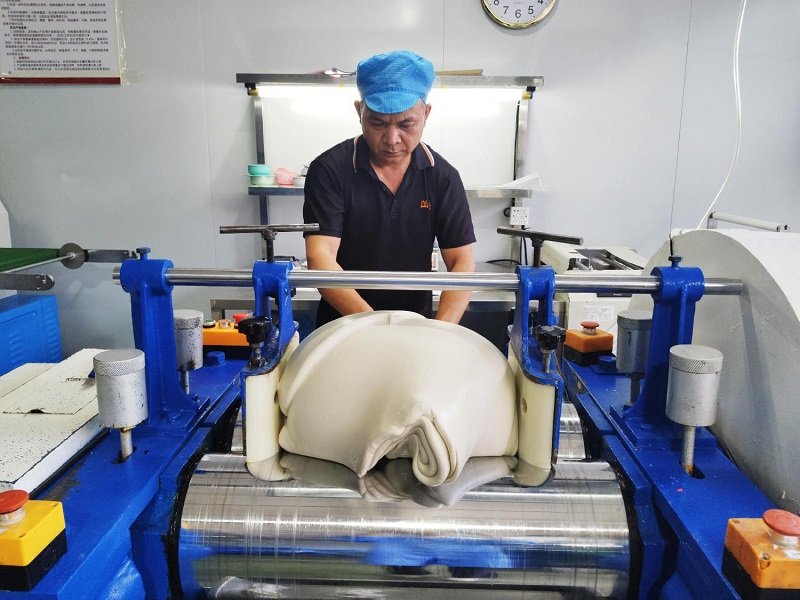
What does “custom” actually mean? Three levels, three budgets
Buyers say “custom” and mean three different things, so nail down which one you want before asking for quotes:
Level 1 – Private label. You pick an existing product from our catalog, put your logo and packaging on it. No new mold, fastest route, and the standard MOQ is 1,000 pieces.
Level 2 – Semi-custom. An existing design with your changes: a Pantone color, your logo molded into the surface, custom packaging, maybe a slight shape tweak. Often no new tooling at all, or a minor mold modification. MOQ for OEM work drops to 500 pieces because you’re committing to a product built around your brand.
Level 3 – Full ODM/OEM from scratch. You have a sketch, a 3D file, or just an idea. We engineer it, cut a new mold, and iterate samples until you sign off. This is the process the rest of this article walks through.
What do you need to send before a factory can quote?
A quote is only as good as the information behind it. To get our 3-day quote, send:
A drawing or reference (a 3D file in STEP or STL is ideal; a hand sketch with dimensions works too), target quantity, your target market (US, EU, or both, because it decides which compliance tests the material and design must pass), and packaging requirements. If you skip the market question, the factory will quote for the cheapest assumption and you’ll find out later that it doesn’t meet FDA or EN 71 requirements for your country.
Within three working days you should get back a unit price at several quantity breaks, tooling cost, and a lead time. If a quote comes back in an hour, it’s probably a template, not a calculation.
The five stages at a glance
| Stage | Typical time | You provide | Factory delivers |
|---|---|---|---|
| 1. Design review & quote | 3 working days | Drawing, quantity, target market | Quote, tooling cost, feasibility notes |
| 2. Mold making | 5 working days | Tooling payment (50/50 is common) | Production mold, steel certificate |
| 3. Sampling & revisions | 7 days per round | Feedback, marked-up photos | Samples, golden sample sign-off |
| 4. Mass production | 15-45 days | Confirmed golden sample | Finished goods, QC records |
| 5. Inspection & shipping | 3-7 days | Inspector booking or waiver | Packed cartons, B/L documents |
Those numbers are ours, and they’re realistic for a single-cavity or multi-cavity mold on a product the size of a teether or bib hardware. Bigger assemblies with multiple bonded parts take longer at every stage, and any honest factory will say so up front.
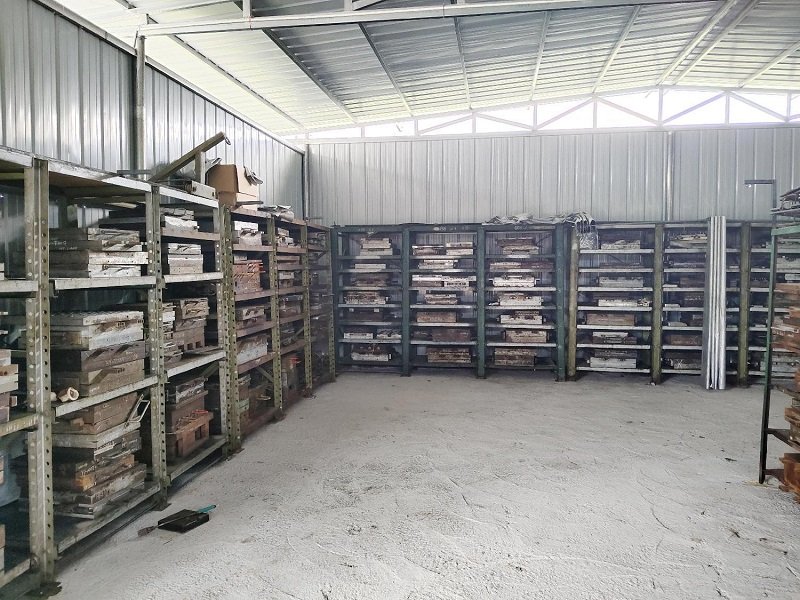
Mold making: five days and one question you must ask
Tooling is where your design becomes steel. For a typical baby product mold, five working days covers CNC machining, polishing, and trial venting. The question you must ask before paying: who owns the mold? If you paid the tooling fee, you do, and that should be written on the proforma invoice, not just promised in a WeChat message. Ownership matters if you ever move production, and it matters for exclusivity, no factory should run your design for another buyer while your mold sits on their shelf.
Ask also how the mold is maintained. A mold that gets cleaned and re-vented on schedule produces consistent parts for years; a neglected one starts flashing edges, and flash on a baby teether is a safety issue, not a cosmetic one.
Sampling: the golden sample rule
First samples come off the new mold about seven days later. Inspect them against your drawing, then send feedback as marked-up photos, specific beats polite. We include three rounds of revisions free, which is a fair question to ask any supplier; sampling is where the design gets fixed, and a factory that charges for every iteration is incentivized to rush you into approving a flawed sample.
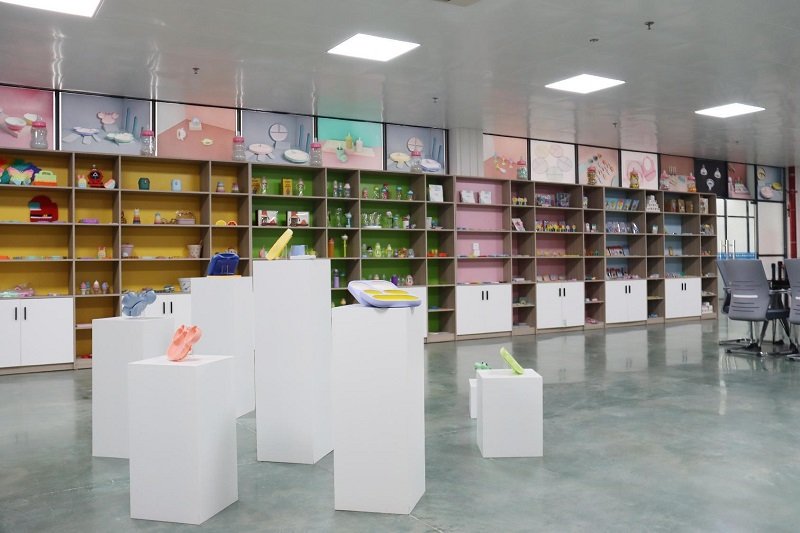
The round that gets approved becomes the golden sample: signed or stamped, one copy with you, one sealed and kept at the production line. Mass production is judged against that exact piece, not against a memory of it. Our sample room holds the sealed golden samples of every active project, and pre-shipment inspection pulls production pieces off the line and compares them side by side.
Mass production: what 15 to 45 days actually contains
In-stock items ship in about 15 days; standard catalog production runs about 30 days for orders up to 10,000 pieces; fully custom products average 45 days from golden-sample approval. Inside that window, the run should pass through three named QC gates: incoming material inspection (IQC) on the raw silicone batch, in-process checks (IPQC) at molding and post-cure, and outgoing inspection (OQC) against AQL 2.5 before packing.
Two process details worth knowing because they separate baby-product factories from general silicone shops. First, post-curing: parts come out of the press and bake in an oven to drive off volatiles; skipping it shortens lead time and smells like a decision you don’t want near a teether. Second, deflashing: excess silicone is removed by hand or cryogenically, then every piece gets visually inspected at the cutting and trimming stations before it earns a place in a carton.
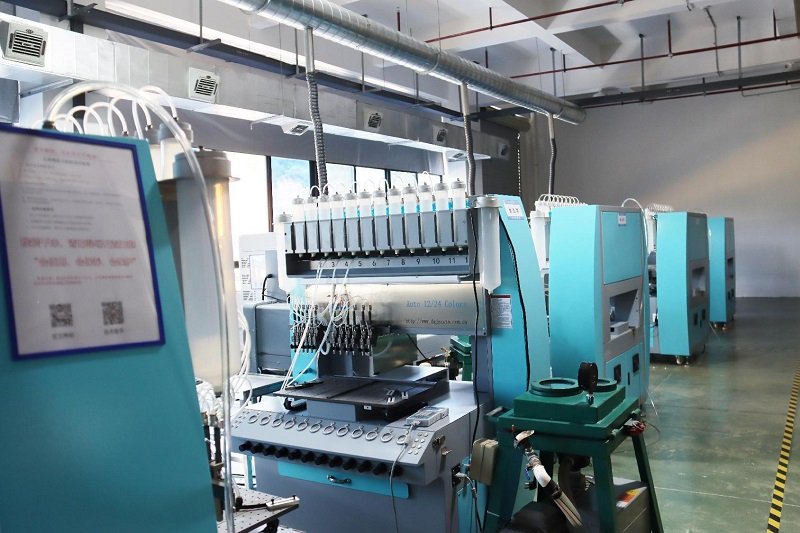
Compliance paperwork for your market
Custom doesn’t change the compliance rules; it just means the paperwork must match your exact product, not “a product like yours”. For the US, our facility is FDA-registered (No. 3023263259, listing D472406) and silicone for baby feeding items is tested against 21 CFR 177.2600; for Europe, LFGB (German food-contact law, stricter than the EU framework) and EN 71-3 for anything mouthable. A good factory tells you which tests your specific design needs before tooling starts, because some test results depend on the colorant and material batch you chose. If you want the full comparison, we wrote a separate piece on FDA vs LFGB vs EN71 certification.
Packing and shipping: the stage everyone forgets to inspect
Finished parts are packed in a GMP-standard room with UV-sterilized equipment, individual polybags, then cartons marked with your artwork. Book a third-party inspection (SGS, QIMA, or anyone you trust) before the balance payment; a confident factory says yes without drama. Freight is usually your call: sea for volume, air for launches, courier for samples. We’ve covered how to vet all of this in our factory audit checklist.
If you’re at the idea stage right now, the fastest way to test a factory is to send the same drawing to two or three, including us, and compare the questions they ask. The one that asks about your target market and testing requirements before quoting is the one that has actually shipped custom baby products before. Our contact page goes straight to the project team, drawing or napkin sketch both welcome.
Frequently asked questions
How long does a custom silicone baby product take from design to shipment?
About 60 days for a typical single-part product: 3 days to quote, 5 days for the mold, 7 days per sampling round, and 45 days for production, inspection, and freight. Complex multi-part assemblies take longer.
How much does a silicone product mold cost?
A single-cavity production mold for a teether-sized item typically runs a few hundred to around a thousand US dollars depending on cavity count and steel grade. The quote should state mold ownership terms in writing.
Who owns the mold I paid for?
You do, if the tooling fee is on your invoice. Confirm it on the proforma invoice and ask where and how the mold is stored and maintained.
What MOQ should I expect for custom silicone baby products?
OEM orders commonly start at 500 pieces; private-label catalog items at 1,000. Quotes promising tiny MOQs on fully custom designs usually mean the mold is shared or the factory is a trader.