
Short answer: a faint smell that disappears after one boil is normal post-cure residue, but a smell that survives repeated boiling points to filler or off-ratio material. The two-minute check that matters more than your nose is the twist test: twist the product hard, and white stress lines that stay mean the silicone is likely stretched with fillers. Here’s how to run both checks, and what to ask a supplier whose sample fails.
This question comes up in almost every first sample round, usually with the sample held at arm’s length and a suspicious expression. It’s a fair suspicion. Fillers are how some factories cut silicone cost by a third, and smell plus twist behavior is how buyers catch it without a lab. This is the conversation we have when it comes up, condensed.
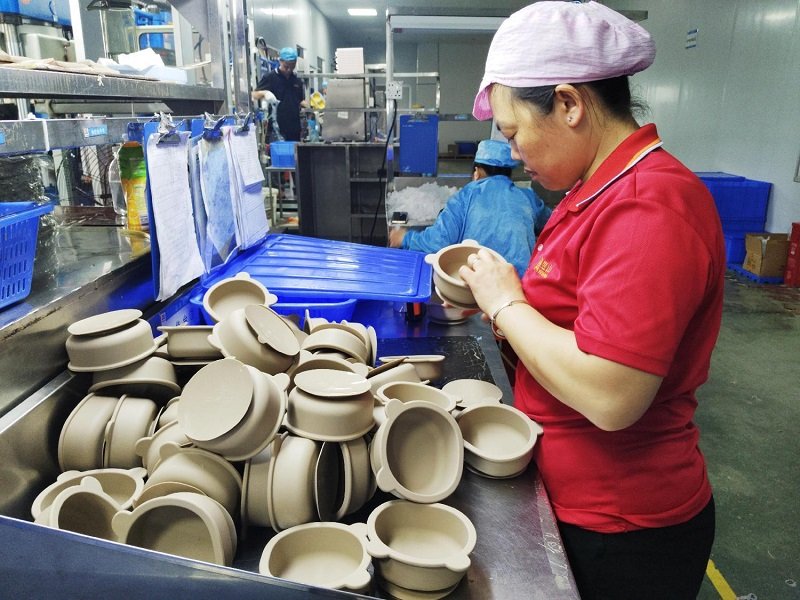
Why does new silicone smell at all?
Platinum-cured silicone cures into a stable polymer, but the post-cure process (a controlled oven bake after molding) drives off trace volatiles left from curing. Skip or shorten the post-cure and the residue stays in the part, which is the faint “new silicone” smell. It’s not toxic, and one wash plus one boil removes it. A factory that skips post-cure saves minutes per batch, and the smell is how you detect the shortcut.
A smell that returns after boiling, or a chemical odor that hangs around for weeks, is a different story. That usually means filler content, most commonly calcium or silica extenders, or uncured material from a bad mix ratio. Both are material-quality problems that no amount of washing fixes.
The twist test, step by step
Take the sample, grip both ends, and twist it firmly in opposite directions as if wringing a towel. Then look at the stressed area against daylight:
Clear or stays the color: unfilled platinum-cured silicone. It deforms, whitens slightly under the strain while twisted, and the white disappears the moment you release. That’s healthy material.
White lines that stay after release: filled silicone. The fillers have disrupted the polymer network, and the stress marks don’t recover. Twist the same sample daily for a week and a filled part will eventually crack at those lines. This is the test our own clients run in front of us at sample review, and we encourage it, because it takes two minutes and settles the material question better than any certificate.
Tears with a rough, chalky edge: heavily filled or degraded material. Reject the sample outright; this product will fail at a teething surface eventually.
What to ask a supplier whose sample smells
Three questions, in this order. First: what is the post-cure temperature and duration for this product? A real factory answers with numbers, something like two hours at 200°C, because it’s on the work instruction. Second: is the material platinum-cured and unfilled, and can I have the material data sheet? The sheet lists filler content directly. Third: can you run a boil test on camera, then repeat the twist test on the boiled piece? Video evidence beats email adjectives every time.
If the answers come back vague, the sample told you the truth. Fillers aren’t automatically unsafe at food-grade levels, but they degrade tear strength, flexibility and odor behavior, and they exist to cut cost. You’re entitled to know what you’re paying for either way.
What we specify on our own line
Platinum-cured, unfilled silicone, with post-cure baked into the process for every batch, on everything from our bibs and utensils range to the fruit feeder pouch. Material data sheets go out with samples on request, and the certification comparison in our FDA vs LFGB guide covers which documents to demand for your market. If you’re comparing suppliers right now, our factory audit checklist lists the material questions alongside the process ones, and the project team will run the twist test on camera with your own sample against ours if it helps settle a debate.
Frequently asked questions
Is silicone smell harmful to babies?
The normal first-use smell is trace volatiles from curing and disappears after one boil; it isn’t harmful. A persistent chemical smell signals fillers or off-ratio material, which is a quality problem worth rejecting.
Does freezing remove silicone odor?
No, and neither does soaking longer than a day. Odor from post-cure residue goes with heat (a boil), not cold. Persistent odor needs a material answer, not a cleaning answer.
Can I test filler content without a lab?
The twist test catches most cases in two minutes: white stress lines that remain after release indicate filled silicone. For contracts and disputes, a lab density test gives the number in writing.