
Before importing silicone baby teethers, check nine things: material certification, one-piece construction, small-parts geometry, surface quality, market compliance (FDA/CPSIA for the US, EN 71 for Europe), post-curing, hardness spec, temperature durability, and labeling. Most teether recalls and customs rejections trace back to one of these being skipped at the sourcing stage, not at production.
I’ve spent years on the production side of teethers at QLink Silicone, including the unglamorous part: watching buyers discover problems that a two-hour checklist would have caught before the deposit was paid. This is that checklist. It applies to any supplier you’re evaluating, and if you’re quoting against our teether manufacturing page, run it on us too.

1. Ask for the material certificate, not a material claim
“100% food-grade silicone” is a sentence, not a document. What you want is the raw material’s certification against the food-contact regulation of your market: 21 CFR 177.2600 compliance documentation for the US, LFGB-tested material (with the actual migration test report, not just a logo) for Europe. Ask whether the silicone is platinum-cured; it costs a bit more than peroxide-cured and leaves fewer byproducts after curing, which matters for anything a baby will gum for twenty minutes at a time.
Also ask whether fillers are used. Some factories blend in extenders to cut cost, which softens the price and the safety margin at the same time. A straight answer plus a batch-traceable material cert is what a serious supplier looks like.
2. One-piece construction beats everything else
The safest teether is molded as a single piece of silicone: no glued joints, no inserted plastic rings, no fabric sleeves. Every joint is a future failure point, and a failed joint produces exactly the kind of part that ends up in a toddler’s airway. Multi-part designs can be made safe, but they demand bonded-part pull testing and a factory that actually runs it. When you’re comparing quotes, a one-piece design at a slightly higher unit price is usually the better engineering decision, and it’s cheaper to inspect.
3. Put a ruler to the geometry, literally
Small-parts testing isn’t mysterious. The EN 71-1 small parts cylinder (and the CPSC equivalent) tells you in minutes whether any component of the teether, or the whole teether if it’s small enough, fits through a hole sized like a child’s throat. Bring a cylinder to your sample review, or ask the factory to video the test. Handle diameter, loop openings, and protrusion length all get checked against the same principle: if a baby can wedge it into a mouth or a throat, someone eventually will.
4. Judge the deflashing, because babies judge it with their gums
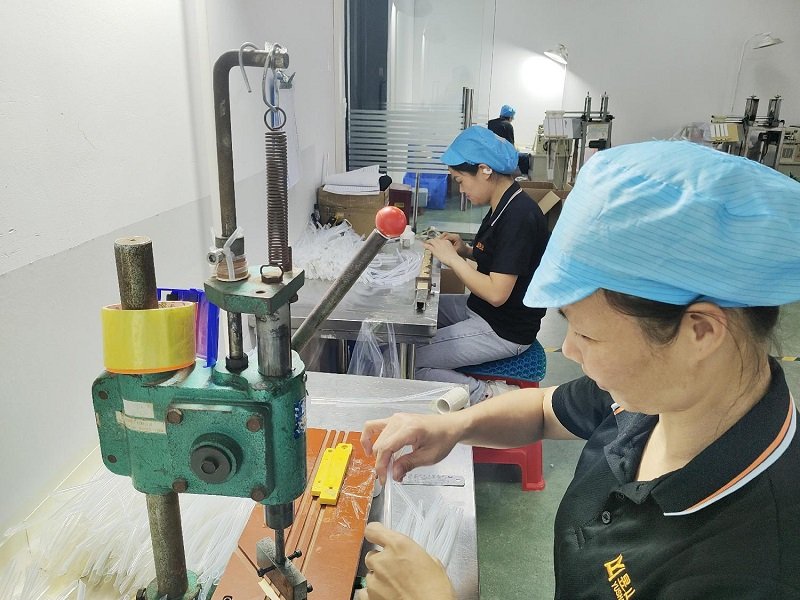
After molding, excess silicone is trimmed off. Done well, the edge is smooth and invisible; done fast, you feel a seam line or a sharp burr. Run your finger around every edge of the sample. Then check the consistency: fifty pieces from the same batch should feel identical, which tells you the deflashing is a controlled process, not luck. Our trimming happens at a dedicated cutting station with 100% visual inspection, because flash on a teether is a safety complaint waiting to happen, not a cosmetic one.
5. Match the compliance paperwork to your market
| Market | What the teether needs | What you should receive |
|---|---|---|
| United States | FDA food-contact compliance (21 CFR 177.2600), CPSIA testing, facility registered with FDA | Material test report, CPC (Children’s Product Certificate), FDA registration number |
| European Union | EN 71-1 (mechanical), EN 71-3 (chemical migration), LFGB food contact for the silicone | Notified-lab test reports, Declaration of Conformity |
| UK | Same as EU in practice, UKCA marking | UKCA documentation |
One clarification that saves arguments later: the FDA does not “approve” teethers. What applies is facility registration (ours is No. 3023263259) plus food-contact material compliance and CPSIA testing. Any supplier who promises “FDA approval” for a teether is either confused or selling you a story. The full certification landscape, including which standard bites hardest for which product, is in our FDA vs LFGB vs EN71 comparison.
6. Post-curing: the step you can smell
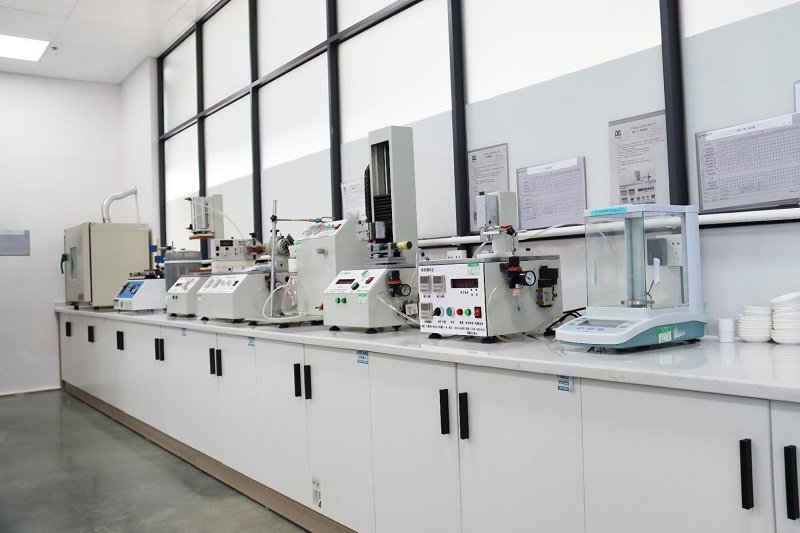
LSR parts come off the press and should be post-cured in an oven to drive off volatile residues. A teether that smells strongly of chemicals out of the bag was either under-cured or not post-cured. Here’s a field test any buyer can run: boil a sample for 30 minutes, cool it, smell it, and check whether the surface turns tacky. Properly cured, food-grade silicone comes through boiling water unchanged and close to odorless.
7. Pin down the hardness, in Shore A numbers
Teether stiffness lives on the Shore A scale, and most baby teethers land between 30 and 50. Too soft and the part collapses when chewed; too hard and it doesn’t soothe gums the way it’s supposed to. Different zones of one design can use different hardnesses, which is a genuine engineering capability and worth asking about. What matters commercially: get the number written on the spec sheet and confirmed on the golden sample, so batch two can’t quietly arrive a different creature than batch one.
8. Test temperature durability before you order thousands of them
Teethers get frozen, boiled, steamed, and run through dishwashers by real parents who read none of your packaging. Platinum-cured silicone handles roughly -40°C to 230°C, which is the honest reason it dominates this category, but your specific design with its colors and any inserts needs its own testing. Freeze one, boil one, steam one, run one through a dishwasher cycle, then re-run the smell, tackiness, and pull checks. It costs you an afternoon and a kettle.
9. Check labeling and traceability before the cartons close
US imports need CPSIA tracking labels on the product and packaging (batch identification, manufacture date and location), plus age grading and any required warnings on the retail box. Europe needs CE marking with a DoC behind it. Get the artwork reviewed against these rules before printing, because relabeling a packed carton in a warehouse is exactly as miserable as it sounds. And confirm how the factory links a retail carton back to a production batch and a material lot; that traceability is what turns a quality question into a scoped answer instead of a full recall.
How to run these nine checks without slowing your project down
Compress them into the sampling phase. Send the same questions to every factory you’re evaluating, score the answers, and weight the ones with documents attached. A supplier who sends a material cert, a small-parts test video, and a boiling test video before you ask twice is telling you how the next two years of orders will go. For the broader vetting picture beyond the product itself, our factory audit checklist covers the factory-level checks, and the project team will run through this list with you on a live floor tour.
Frequently asked questions
Do silicone baby teethers need FDA approval?
No premarket approval exists for teethers. What applies is FDA facility registration of the manufacturer, food-contact compliance of the silicone (21 CFR 177.2600), and CPSIA testing with a Children’s Product Certificate for the US market.
What hardness should a silicone teether be?
Most land between Shore A 30 and 50. Softer chews easier for young gums; firmer holds shape for textured designs. Get the number written into the spec and confirmed on the golden sample.
How can I test a teether’s safety myself?
Run a small-parts cylinder test, boil a sample for 30 minutes and check for smell or tackiness, pull any protruding parts firmly, and inspect every edge for flash. These four checks catch most problems in an afternoon.
Which certifications does a teether need for Europe?
EN 71-1 for mechanical safety, EN 71-3 for chemical migration, and LFGB-compliant food-contact silicone, with CE marking and a Declaration of Conformity on the product file.